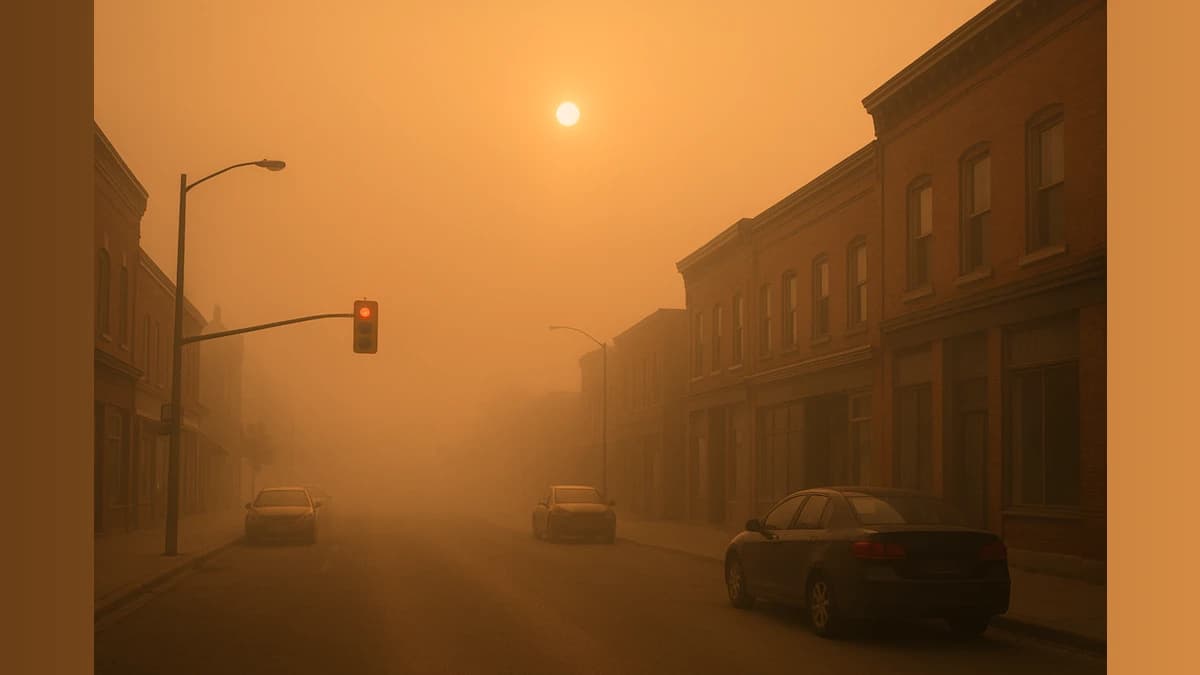
Toronto woke up Wednesday to an unwelcome distinction: the worst air quality of any major city on the planet. Smoke drifting south from forest fires burning in northwestern Ontario has settled over Canada's largest city, creating hazardous breathing conditions for millions of residents.
As of 8 a.m. Wednesday, IQAir—a Swiss air quality technology company that operates the world's largest real-time air quality information platform—placed Toronto at the top of its global rankings. Our city surpassed Kinshasa in the Democratic Republic of the Congo, Delhi, India, Dubai, United Arab Emirates, and Jerusalem, Israel.
Environment Canada issued a yellow air quality warning covering much of southern Ontario, cautioning that the smoke could linger through Thursday in some areas. The agency is urging residents to take the threat seriously and adjust their daily routines accordingly.
Health officials warn that as smoke concentrations rise, so do health risks. Residents should minimize time spent outdoors and consider rescheduling or reducing outdoor sports, activities, and events. Common symptoms include eye, nose, and throat irritation, headaches, and mild coughing. More severe reactions—though less common—can include wheezing, chest pain, and severe coughing.
Anyone experiencing what they believe to be a medical emergency should seek immediate medical assistance, Environment Canada emphasized.
Certain groups face elevated risk from wildfire smoke exposure. People aged 65 and older, pregnant individuals, infants and young children, those with existing illnesses or chronic health conditions, and people who work outdoors should be especially cautious. These vulnerable populations are advised to reduce or reschedule strenuous outdoor activities and monitor themselves for symptoms.
The air quality crisis compounds an already challenging situation for residents dealing with an intense heat wave that began Monday. Maximum temperatures Wednesday are forecast to reach 30 to 36 C, with humidex values making it feel like 38 to 42 C—a dangerous combination when paired with poor air quality.
The oppressive heat is expected to persist into the evening hours and may continue through Thursday or Friday, particularly in areas near Lake Erie and Lake Ontario. Tuesday marked the peak of the heat wave so far, with humidex values making temperatures feel like 38 to 45 C across parts of southern Ontario.
For residents navigating both the heat and smoke warnings, staying indoors in air-conditioned spaces when possible offers the best protection. Those without access to air conditioning should seek out cooling centers, while keeping windows closed to prevent smoke infiltration.