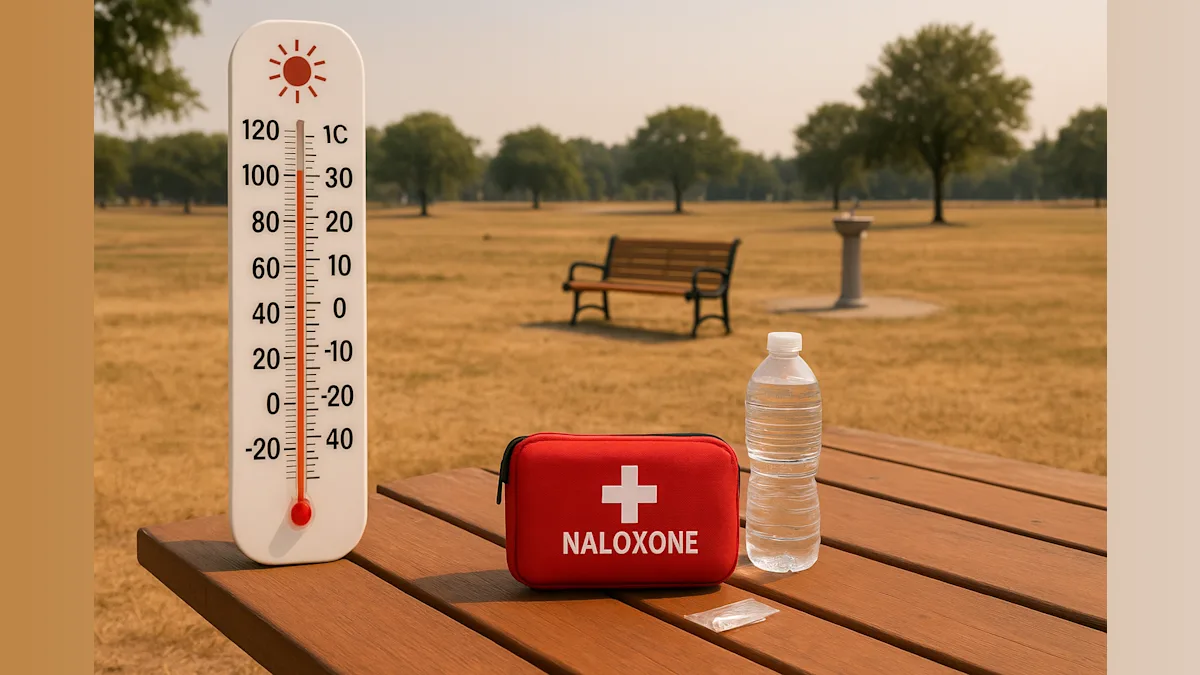
As temperatures soar across southern Ontario, our communities are facing a troubling convergence of crises: extreme heat and a rising tide of drug overdoses that experts say may be connected.
Twenty-nine overdoses, 19 involving fentanyl, were reported in Windsor-Essex during the week of June 28 to July 4, prompting the public health unit to issue a drug alert. Public health officials said there were an "elevated number" of opioid overdoses reported by emergency departments.
The pattern extends beyond Windsor-Essex. On June 24, the Southwestern Public Health Unit issued a drug alert for potential xylazine, fentanyl and benzodiazepine found in the street drug supply. While no data was available, a spokesperson for the health unit told Global News they continue to hear reports from community partners about a rise in overdoses in the community.
On July 3, Waterloo Region Public Health issued multiple drug alerts. One warned about the increasing number of street drugs containing fentanyl, while the other cautioned users about extreme heat.
Vulnerable Populations at Greatest Risk
People experiencing homelessness and those without access to cooling spaces face compounding dangers during heat waves. The Welcome Centre Shelter in Windsor, Ont., has witnessed this crisis firsthand.
"Last week in particular with the high heat advisory, it was indeed a noticeable increase," Anastasia Adams, a harm reduction co-ordinator at the shelter for women and children, told Global News. "The higher temperatures impact an individual's thermoregulation, can increase risk of dehydration and without access to a cooler space those in active substance use are at a greater risk of overdose and/or heat-related illnesses."
Adams emphasized the urgency of the situation: "Because of this, during heat events, people who use substances should definitely be considered a priority population."
Following the extreme heat wave last week, the Welcome Centre opened its own cooling space to accommodate people seeking reprieve from the heat. At the cooling centre, Adams said they also offer harm reduction services.
"Access to cooling centres is essential at this time with staff who are trained to respond to drug poisonings or overdoses and are able to offer harm reduction materials and education," she said. "Those in active substance use are often excluded from some of these services and focusing on a harm reduction, lower barrier approach is paramount."
Understanding the Heat-Overdose Connection
Heat is not the only factor driving the rise in overdoses, but it can serve as a compounding factor, Dr. Hawre Jalal, a professor in the School of Epidemiology and Public Health at the University of Ottawa, told Global News.
Dr. Jalal explained that opioid use causes people to enter a slow state of metabolism and respiration. While there is no direct interaction between heat and opioids, he said heat adds stress on the body, significantly increasing the load on the cardiovascular system.
When other types of drugs are mixed into the supply, the consequences can be even more extreme. Dr. Jalal said first responders also need to evaluate if a patient needs to be treated for heat exposure when treatment for an overdose is given.
What Our Community Can Do
If you suspect someone is experiencing an overdose, call 911 immediately. During extreme heat events, checking on vulnerable neighbors and ensuring people have access to cooling spaces can be lifesaving.
The convergence of extreme heat and the ongoing overdose crisis underscores the need for comprehensive support systems that recognize substance use as a public health issue requiring compassion, resources, and immediate action.